Our work
Every child deserves a chance. Be the reason they thrive today.
 DONATE NOW AND SUPPORT OUR MISSION.
Education in Crisis (EiC)
Change begins with you.
Education in Crisis (EiC) works to ensure that children and youth affected by conflict, displacement, and emergencies can access safe, inclusive, and high-quality education.
In fragile settings such as Sudan and other crisis-affected regions, education is not only a right it is protection, stability, and a pathway to recovery. EiC delivers education across the full humanitarian–development continuum, from rapid emergency response to longer-term system strengthening.
Across Africa, the scale and complexity of humanitarian crises are placing unprecedented strain on education systems and denying millions of children and youth their right to learn. Armed conflict, protracted displacement, climate-induced shocks, epidemics, and economic instability continue to disrupt education across the Sahel, the Horn of Africa, Central Africa, the Great Lakes region, and parts of Southern Africa. As a result, a significant proportion of the 222 million crisis-affected school-aged children and youth globally are concentrated on the African continent, where education systems are already operating beyond their absorptive capacity.
Africa hosts some of the world’s largest and longest-running displacement situations. Conflict and insecurity have forced tens of millions of people across the continent to flee their homes, with children and youth accounting for more than half of the displaced population. Countries such as Sudan, South Sudan, the Democratic Republic of the Congo, Somalia, Ethiopia, Nigeria, Burkina Faso, and Mozambique face overlapping emergencies that have led to widespread school closures, destruction of education infrastructure, and severe teacher shortages. In many contexts, schools are attacked, occupied, or rendered unsafe, further eroding access to education.
ACCESS TO SCHOOLING
Ensuring Every Child Can Enroll and Stay in School
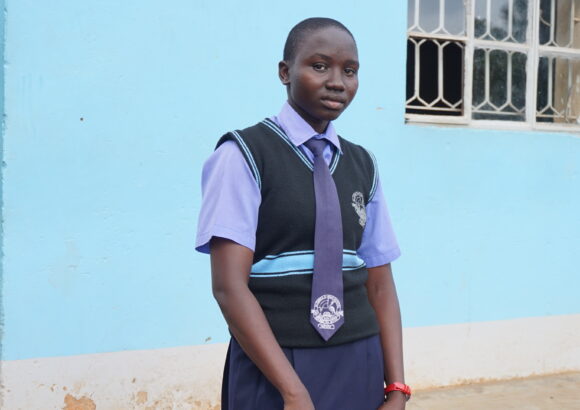
In crisis-affected contexts, millions of children are denied access to education due to displacement, poverty, insecurity, and damaged infrastructure. EiC works to remove these barriers and ensure that children can enroll, attend, and complete their education.
LEARNING OUTCOMES
Improving Literacy, Numeracy, and Life Skills
Access alone is not enough. EiC focuses on meaningful learning outcomes that equip children with the skills they need to thrive during and beyond crisis. Children who fail to acquire foundational skills are less likely to transition successfully to higher levels of education, access decent employment, or contribute meaningfully to economic growth and social cohesion.
- Strengthen foundational literacy and numeracy
- Support age-appropriate and accelerated learning pathways
- Integrate essential life skills, including communication, problem-solving, and resilience
- Adapt teaching methods to crisis and low-resource settings
- Building Confidence: Build students in building self-confidence, to help them realize their academic potential
- Context-responsive curricula
- Continuous assessment and learning monitoring
- Support for learners who have experienced learning loss
Learning poverty, the share of children unable to read and understand a simple text by age 10 remains critically high across Africa and is a major driver of poor learning outcomes. At least 1in 10 African countries, a majority of children complete several years of schooling without acquiring foundational literacy and numeracy skills. This crisis is rooted not only in limited access to schooling, but also in the low quality, inequity, and fragility of education systems.
Key contributing factors include overcrowded classrooms, shortages of trained and motivated teachers, limited availability of age-appropriate learning materials, and instruction delivered in languages learners do not fully understand. In crisis-affected and fragile contexts, conflict, displacement, climate shocks, and school closures further disrupt learning continuity, compounding existing gaps. As a result, children often fall behind early and never recover, leading to high repetition and dropout rates, particularly in upper primary and lower secondary education.
Learning poverty disproportionately affects girls, children with disabilities, refugees, internally displaced children, and those in rural or impoverished communities. Gender norms, early marriage, child labor, and safety concerns limit girls’ attendance and engagement, while inclusive education services and assistive resources for children with disabilities remain insufficient. In displacement settings, host schools are frequently overstretched and under-resourced, undermining learning quality for both displaced and host-community learners.
The consequences of learning poverty are far-reaching. Children who fail to acquire foundational skills are less likely to transition successfully to higher levels of education, access decent employment, or contribute meaningfully to economic growth and social cohesion. Addressing learning poverty in Africa therefore requires early-grade, child-centered, and crisis-responsive interventions that prioritize foundational learning, teacher capacity development, inclusive and gender-responsive approaches, and system strengthening especially in fragile and emergency contexts to ensure that schooling translates into real learning for every child.
Integrated Support Services
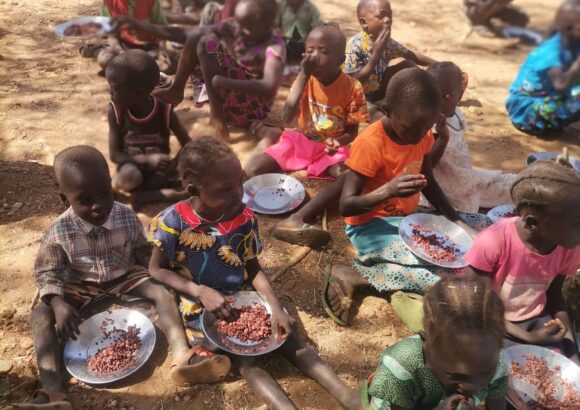
Building holistically Safe, Nourished, Healthy Learning Environments
Integrated support services ensure that children’s learning, protection, health, and well-being are addressed holistically, especially in crisis-affected and emergency contexts.
SAFETY & PROTECTION
Safe Learning Environments for Every Child
Humanitarian emergencies and protracted crises currently affect millions of children around the world with serious consequences for their ability to learn, grow and develop. Children are especially vulnerable in conflict situations to “toxic trauma”, with potential lifelong impacts to their ability to reach their full potentials through learning, growth and development. Children affected by conflict often experience trauma. EiC integrates psychosocial support (PSS) into education to support emotional recovery and resilience.
CONTINUITY OF LEARNING
Keeping Education Going—No Matter the Circumstances
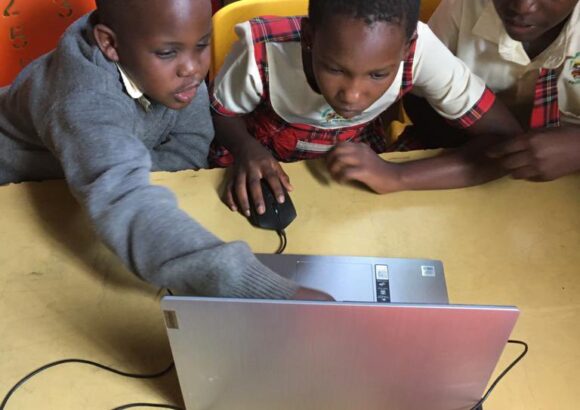
Crisis disrupts schooling. EiC ensures that learning continues even when traditional schooling is not possible. Through the development of online and offline platform called TutaLearn, is an innovative e-learning and digital resource platform designed to equip educators in crisis-affected regions with the tools, training, and resources they need to provide quality, inclusive, and adaptable education.