Community Engagement and Participation
Every child deserves a chance. Be the reason they thrive today.
 DONATE NOW AND SUPPORT OUR MISSION.
By mobilizing local knowledge and resources, EiC ensures that education solutions are not only delivered to communities, but built with them—strengthening resilience, dignity, and long-term impact.
Thematic Expertise and Programme
Transforming Emergency Response into a Bridge toward Recovery and Resilience
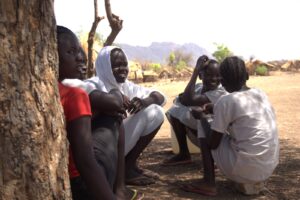
Education in Crisis (EiC) was founded on the belief that local communities are not beneficiaries of education recovery, they are its architects. Communities understand their own needs, challenges, and strengths far better than any external organization. In crisis and conflict settings, they are often the first to respond when formal systems collapse, sustaining learning through collective effort, local knowledge, and resilience.
EiC’s work is therefore rooted in the conviction that education interventions are most effective, relevant, and sustainable when communities are actively involved in shaping them from identifying priorities to implementing solutions and safeguarding outcomes.
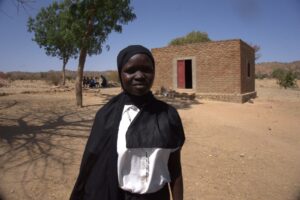
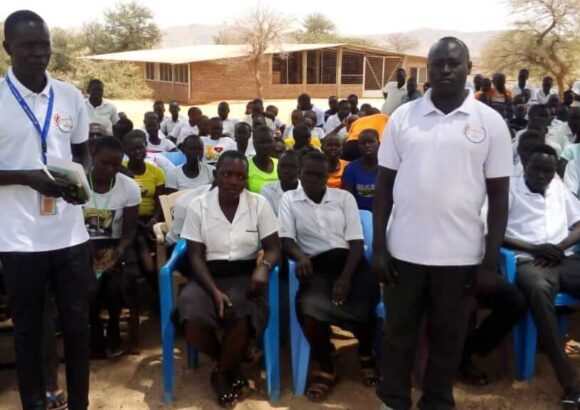
For EiC, community engagement goes beyond consultation. It is a shared process of planning, implementation, and accountability that recognizes communities as co-owners of education initiatives.
EiC works with:
- Parents and caregivers
- Teachers and volunteer educators
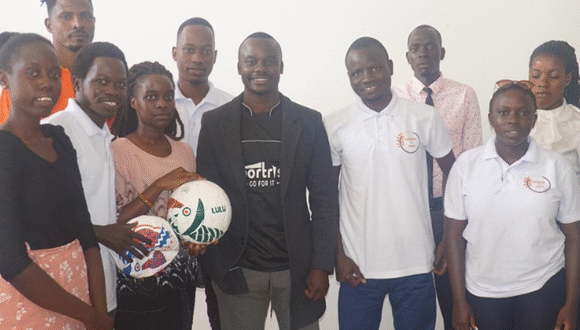
- Youth and adolescent leaders
- School and community education committees
- Traditional and local leaders
Together, these actors play a central role in:
- Identifying education needs and barriers
- Supporting access to learning during emergencies
- Protecting children from education-related risks
- Sustaining education services in hard-to-reach contexts
In crisis-affected contexts, education cannot wait for systems to recover. Community engagement is often the difference between learning stopping entirely and education continuing against the odds.
When communities are meaningfully engaged:
- Education responses are faster and more adaptive
- Learning spaces are safer and more protective
- Children are more likely to enroll, attend, and remain in school
- Dropout, early marriage, and child labor risks are reduced
- Programs are sustained beyond short-term funding cycles
EiC’s Key Interventions and commitment to EiE
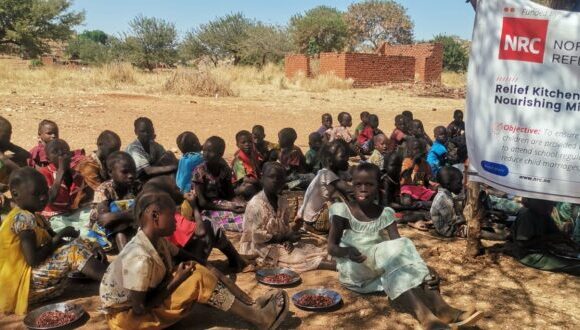
Our emergency response work is grounded in a child-centered, rights-based and participatory approach that integrates education, protection, nutrition, relief response and psychosocial support as critical life-saving components for displaced, marginalized and crisis-affected populations. We respond rapidly through community-led mechanisms supporting;
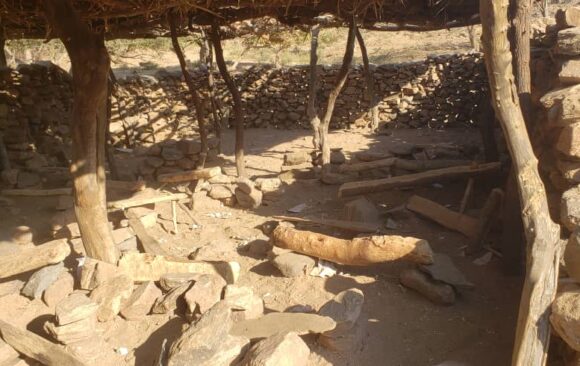
- Temporary learning shelters and WASH support in schools,
- Establishing community-based protection committees, working groups and referral mechanisms,
- Conducting rapid PSEA, GBV risk assessments and awareness campaigns,
- Psychosocial support and trauma counselling for survivors,
- Awareness and hygiene campaigns through school clubs and community networks,
- Inclusion of persons with disabilities, refugees, internally displaced persons (IDPs), women, youth and
- Teacher training in alternative and remote learning methodologies.
Regardless of the situation they find themselves in, all children have the right to education. In 2023, therefore, at EiC we began to adapt and develop our Digital Education Framework in Africa to crisis-related contexts by applying a holistic approach aligned with the principles of the INEE (Inter-Agency Network for Education in Emergencies). We are working with local communities and organisations that help us to address other areas that are also necessary for ensuring high-quality learning within a refugee context, including psychosocial support, safe learning spaces and food, nutrition and health care.
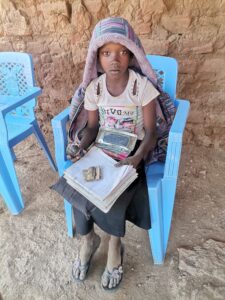
Helping out-of-school children catch up on lost education. Globally, there are about 105 million out of school children in emergencies (OOSCiE); this includes children aged 3 until the expected age of completion of upper secondary. About 52% of all OOSCiE live in eight countries alone: Ethiopia, Pakistan, Afghanistan, Sudan, DR Congo, Myanmar, Mali, and Nigeria. These OOSCiE are out of school, either because they never started, or because they dropped out after enrolment. The most marginalized are most at risk, including forcibly displaced children and young people, ex-combatants, girls, and children and youth with disabilities. With each missed school year, there is a greater likelihood that these learners will be unable to return to formal education, resulting in greater risks to their protection. It is estimated that about 24 million learners, from pre-primary to university level, are at risk of not returning to school in 2020 following the education disruption due to COVID-19 (UNESCO, 2020).
What is Accelerated Education?
Accelerated Education (AE) is a flexible, age-appropriate program run in an accelerated time frame, which aims to provide access to education for disadvantaged, over-age, out-of-school children and youth. This may include those who missed out on or had their education interrupted by poverty, marginalization, conflict, and crisis. The goal of Accelerated Education Programmes (AEPs) is to provide learners with equivalent, certified competencies for basic education using effective teaching and learning approaches that match their level of cognitive maturity.
Establishing temporary learning centers in conflict zones. In countries affected by emergencies, children lose their loved ones and homes. They lose access to safe drinking water, health care and food. They lose safety and routine. And, without access to education, they risk losing their futures. Over 470 million children – more than one in six globally – live in areas affected by conflict. Education has been severely disrupted in these conflict zones – by the end of 2024, more than 52 million children in countries affected by conflict are estimated to be out of school. Girls are nearly 2.5 times more likely to be out of school in conflict-affected countries compared to girls in other places.
EiC helps children develop skills to cope with the trauma of crisis, and supply them with learning spaces that are safe, child-friendly and equipped with water and sanitation facilities. Our work builds capacity by training teachers, supplying learning materials and supporting community efforts to reduce the risk of child marriages. At the centre of it, EiC strongly advocates for the right to education for every child and a protective learning environment, forging partnerships at all levels to safeguard learning for every child. EiC monitors and supports the implementation of the Safe Schools Declaration and Guidelines for Protecting Schools and Universities from Military Use during Armed Conflict. The State of the World’s Children 2015 by UNICEF – Reimagine the Future – stated that Technology initiatives must be carefully designed to ensure that these powerful tools will connect with and improve the way teachers teach and students learn in each educational context. They must also be cognizant of the local context – taking into account the infrastructure and capacities required to make technologies work. The full technology ecosystem described below will be most viable in contexts that have reliable electricity, Internet access, teacher training in technology use, and sufficient resources to cover the basics. But programme designers and policymakers working in other contexts should consider which components of the ecosystem will best support their educational objectives.
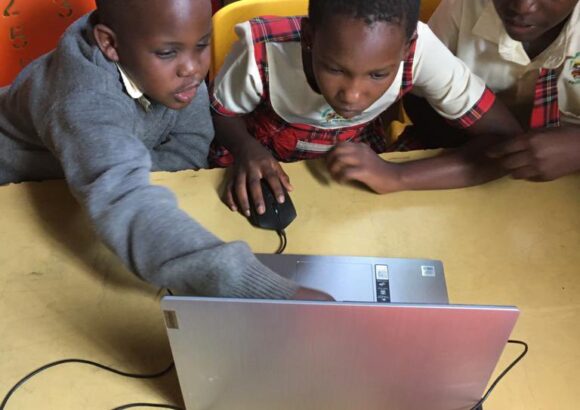
Technology is only a small part of a successful education transformation. Successful e-learning projects require policy changes, new teaching practices, new education resources and additional training and ongoing support for educators – all of which are where the real educational benefit lies. However, it is fundamental to get the technology part right to enable the desired transformations in teaching and learning. While the current discussion on one-to-one learning suggests that the basis is ‘one device’ for every student, the focus should not be on a single technology device, but rather on how to use multiple technologies to reach the more meaningful goals of improving teaching practices, access to educational resources and, finally, what and how students learn. EiC has developed an innovative e-learning program to address some of the learning barriers children face in achieving literacy and numeracy proficiency, access to, and quality of education in emergency situations. The TutaLearn, a digital learning hub whose mission is to enable continuous access to quality education for children, youth, and teachers especially in conflict affected areas to drive improved learning outcomes through high- quality, portable / distance education to support their entry into other education or opportunity pathways, including formal education. EiC also developing data-driven tool, the Education Crisis Response Dashboard (ECRD) to gather real-time education disruption, learning outcomes data to help policy makers, donors and strategic partners in responding to education in humanitarian contexts.


Education in Crisis
What Community Engagement Means at EiC
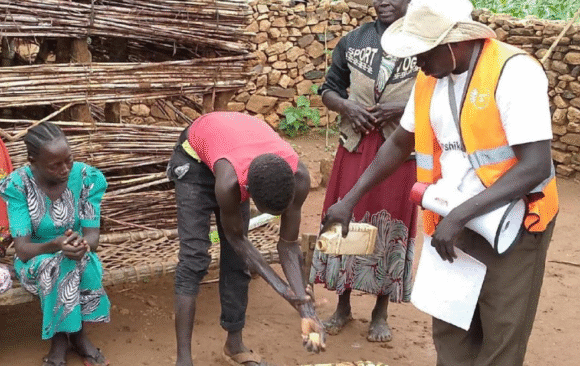
For EiC, community engagement goes beyond consultation. It is a shared process of planning, implementation, and accountability that recognizes communities as co-owners of education initiatives.
EiC works with:
- Parents and caregivers
- Teachers and volunteer educators
- Youth and adolescent leaders
- School and community education committees
- Traditional and local leaders
Together, these actors play a central role in:
- Identifying education needs and barriers
- Supporting access to learning during emergencies
- Protecting children from education-related risks
- Sustaining education services in hard-to-reach contexts
Business Plan
Download the Alister Bank app and simplify your banking. Discover quick, simple and convenient way to take command of your bank account, on your mobile phone.
Why Community Engagement Matters
In crisis-affected contexts, education cannot wait for systems to recover. Community engagement is often the difference between learning stopping entirely and education continuing against the odds.
When communities are meaningfully engaged:
• Education responses are faster and more adaptive
• Learning spaces are safer and more protective
• Children are more likely to enroll, attend, and remain in school
• Dropout, early marriage, and child labor risks are reduced
• Programs are sustained beyond short-term funding cycles