Our Work
Every child deserves a chance. Be the reason they thrive today.
 DONATE NOW AND SUPPORT OUR MISSION.
Education in Crisis (EiC)
Change begins with you.
Education in Crisis (EiC) works to ensure that children and youth affected by conflict, displacement, and emergencies can access safe, inclusive, and high-quality education.
In fragile settings such as Sudan and other crisis-affected regions, education is not only a right it is protection, stability, and a pathway to recovery. EiC delivers education across the full humanitarian–development continuum, from rapid emergency response to longer-term system strengthening.
Across Africa, the scale and complexity of humanitarian crises are placing unprecedented strain on education systems and denying millions of children and youth their right to learn. Armed conflict, protracted displacement, climate-induced shocks, epidemics, and economic instability continue to disrupt education across the Sahel, the Horn of Africa, Central Africa, the Great Lakes region, and parts of Southern Africa. As a result, a significant proportion of the 222 million crisis-affected school-aged children and youth globally are concentrated on the African continent, where education systems are already operating beyond their absorptive capacity.
Africa hosts some of the world’s largest and longest-running displacement situations. Conflict and insecurity have forced tens of millions of people across the continent to flee their homes, with children and youth accounting for more than half of the displaced population. Countries such as Sudan, South Sudan, the Democratic Republic of the Congo, Somalia, Ethiopia, Nigeria, Burkina Faso, and Mozambique face overlapping emergencies that have led to widespread school closures, destruction of education infrastructure, and severe teacher shortages. In many contexts, schools are attacked, occupied, or rendered unsafe, further eroding access to education.
ACCESS TO SCHOOLING
Ensuring Every Child Can Enroll and Stay in School
In crisis-affected contexts, millions of children are denied access to education due to displacement, poverty, insecurity, and damaged infrastructure. EiC works to remove these barriers and ensure that children can enroll, attend, and complete their education.
Girls, children with disabilities, refugees, internally displaced children, and minority groups are disproportionately affected when it comes to access to schooling. From harmful social norms, early marriage, child labor, insecurity, to lack of accessible learning environments, significant reduction of enrollment, retention, and completion rates particularly for adolescent girls remains the most challenging. Children with disabilities remain among the most excluded, as inclusive education services and assistive resources are often absent in crisis-affected settings.
What We Do
- Support school openings and reopening in displacement and conflict-affected areas
- Facilitate enrollment and re-enrollment of displaced and out-of-school children
- Reduce financial barriers through free or subsidized learning options
- Track attendance and retention to prevent dropouts
- Distribute textbooks, learning materials, and school kits
Who We Reach
- Girls and boys affected by conflict, and poverty.
- Refugees and internally displaced children (IDPs)
- Children with disabilities
- Marginalized and hard-to-reach communities
Why It Matters
Access to education is the foundation for protection, dignity, and opportunity. By ensuring access, EiC helps children regain stability and hope.
The education crisis in contexts like Sudan demands a coordinated and urgent response. Reopening schools, restoring infrastructure, and expanding access to inclusive quality learning opportunities both through formal and non-formal pathways are critical to safeguarding the rights and futures of children and young people. In response, EiC focuses on facilitating learning continuity and school reopening through remedial learning programme, digital learning initiatives and capacity building for education stakeholders.
Climate change further compounds these challenges. Recurrent droughts, floods, and food insecurity especially in the Horn of Africa and the Sahel have pushed families into negative coping mechanisms, forcing children out of school to support household survival. At the same time, poverty and underfunded public education systems limit governments’ ability to respond at scale.
Without sustained, coordinated, and equity-focused investment in education in emergencies, Africa risks losing an entire generation of learners undermining social cohesion, stability, and long-term development. Ensuring safe, inclusive, and quality education for crisis-affected children and youth across Africa is therefore not only a humanitarian imperative, but a critical foundation for peace, resilience, and sustainable development.
LEARNING OUTCOMES
Improving Literacy, Numeracy, and Life Skills
Access alone is not enough. EiC focuses on meaningful learning outcomes that equip children with the skills they need to thrive during and beyond crisis. Children who fail to acquire foundational skills are less likely to transition successfully to higher levels of education, access decent employment, or contribute meaningfully to economic growth and social cohesion.
- Strengthen foundational literacy and numeracy
- Support age-appropriate and accelerated learning pathways
- Integrate essential life skills, including communication, problem-solving, and resilience
- Adapt teaching methods to crisis and low-resource settings
- Building Confidence: Build students in building self-confidence, to help them realize their academic potential
- Context-responsive curricula
- Continuous assessment and learning monitoring
- Support for learners who have experienced learning loss
Learning poverty, the share of children unable to read and understand a simple text by age 10 remains critically high across Africa and is a major driver of poor learning outcomes. At least 1in 10 African countries, a majority of children complete several years of schooling without acquiring foundational literacy and numeracy skills. This crisis is rooted not only in limited access to schooling, but also in the low quality, inequity, and fragility of education systems.
Key contributing factors include overcrowded classrooms, shortages of trained and motivated teachers, limited availability of age-appropriate learning materials, and instruction delivered in languages learners do not fully understand. In crisis-affected and fragile contexts, conflict, displacement, climate shocks, and school closures further disrupt learning continuity, compounding existing gaps. As a result, children often fall behind early and never recover, leading to high repetition and dropout rates, particularly in upper primary and lower secondary education.
Learning poverty disproportionately affects girls, children with disabilities, refugees, internally displaced children, and those in rural or impoverished communities. Gender norms, early marriage, child labor, and safety concerns limit girls’ attendance and engagement, while inclusive education services and assistive resources for children with disabilities remain insufficient. In displacement settings, host schools are frequently overstretched and under-resourced, undermining learning quality for both displaced and host-community learners.
The consequences of learning poverty are far-reaching. Children who fail to acquire foundational skills are less likely to transition successfully to higher levels of education, access decent employment, or contribute meaningfully to economic growth and social cohesion. Addressing learning poverty in Africa therefore requires early-grade, child-centered, and crisis-responsive interventions that prioritize foundational learning, teacher capacity development, inclusive and gender-responsive approaches, and system strengthening especially in fragile and emergency contexts to ensure that schooling translates into real learning for every child.
SAFETY & CHILD PROTECTION
Safe Learning Environments for Every Child
Humanitarian emergencies and protracted crises currently affect millions of children around the world with serious consequences for their ability to learn, grow and develop. Children are especially vulnerable in conflict situations to “toxic trauma”, with potential lifelong impacts to their ability to reach their full potentials through learning, growth and development. Children affected by conflict often experience trauma. EiC integrates psychosocial support (PSS) into education to support emotional recovery and resilience.
Safe, inclusive education environments play a critical protective role. Schools and temporary learning spaces offer structure, routine, and supervision, reducing children’s exposure to protection risks such as child labor, early marriage, recruitment by armed groups, and exploitation. When combined with strong safeguarding measures, trained teachers, and clear referral pathways, education settings become key entry points for identifying and responding to child protection concerns.
Education in Crisis maintains dedicated technical capacity in child protection mainstreaming, including PSEA, GBV risk mitigation, MHPSS integration, and safeguarding systems, supported by trained safeguarding focal points and clear referral pathways. EiC’s status as a UN-Rated full-capacity PSEA partner further reinforces its ability to manage protection risks and uphold accountability to affected populations throughout implementation.
What We Do
- Implement robust safeguarding and child protection policies
- Prevent and respond to violence, exploitation, and abuse
- Strengthen and establish safe reporting and referral mechanisms for child protection cases
- Train staff, teachers, and volunteers on safeguarding standards
- Promote school-based protection and safeguarding measures
Our Commitment
EiC maintains zero tolerance for abuse, exploitation, and misconduct. All staff and partners are held to the highest ethical standards.
Why It Matters
Safe education environments protect children’s dignity, well-being, and right to learn. For children affected by crisis, conflict and displacement can have a lasting impact, on their cognitive, emotional, social and physical development with enduring consequences for their future. These children urgently need safe and inclusive spaces where they can heal, continue learning, access mental health and psychosocial support (MHPSS), health care and child protection services.
Ensuring the safety, dignity, and well-being of children is central to effective education programming, particularly in fragile, conflict-affected, and displacement contexts across Africa. Many children face heightened risks of violence, abuse, exploitation, neglect, and psychosocial distress both on their way to school and within learning environments. Girls, children with disabilities, refugees, internally displaced children, and other marginalized groups are especially vulnerable to gender-based violence (GBV), child labor, early marriage, recruitment by armed groups, and other protection risks that directly undermine access to and continuity of learning.
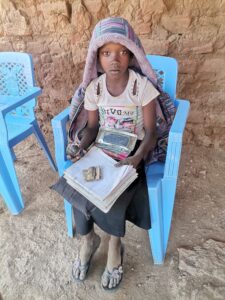
Strong safety and child protection measures are therefore essential to enabling children to enroll, attend, and learn in school. This includes establishing safe, inclusive, and protective learning spaces with clear safeguarding policies, codes of conduct, and reporting and referral mechanisms aligned with national child protection systems and UNICEF standards. Teachers, school leaders, and community facilitators play a critical role and must be trained in child safeguarding, positive discipline, prevention of sexual exploitation and abuse (PSEA), and identification of children at risk.
Psychosocial support (PSS) is equally vital, as many children in emergency and post-crisis settings experience trauma that affects concentration, behavior, and learning outcomes. Integrating structured PSS activities into schools and child clubs, alongside referral pathways to specialized services, helps children recover, build resilience, and re-engage in learning.
Community engagement strengthens child protection by fostering shared responsibility for children’s safety. Active Parent-Teacher Associations (PTAs), child protection committees, and adolescent-led groups can help monitor risks, promote safe school attendance, and challenge harmful social norms. By embedding safety and child protection across education programming, schools become not only places of learning, but also protective environments that uphold children’s rights, dignity, and well-being.
CONTINUITY OF LEARNING
Keeping Education Going—No Matter the Circumstances
Crisis disrupts schooling. EiC ensures that learning continues even when traditional schooling is not possible. Through the development of online and offline platform called TutaLearn, is an innovative e-learning and digital resource platform designed to equip educators in crisis-affected regions with the tools, training, and resources they need to provide quality, inclusive, and adaptable education.
To ensure continuity of education, it is fundamental to provide learning opportunities with innovative approaches and through diverse modalities such as distance education platforms, access to online courses or through mass media that do not require internet access, such as: radio, television and smartphones, as well as printed materials.
What We Do
- Remote and alternative learning solutions
- Catch-up and accelerated learning programs
- Flexible schedules for displaced or working children
- Low-tech and no-tech learning options
Delivery Methods
- Printed materials
- Radio and offline learning tools
- Community-based learning models
Why It Matters
Continuity of learning is essential to protecting children’s right to education in contexts affected by conflict, displacement, climate shocks, and other emergencies. When education is disrupted for prolonged periods, children face significant learning loss and are at heightened risk of dropping out permanently. For many, especially girls and marginalized children, interrupted learning increases exposure to child labor, early marriage, exploitation, and recruitment by armed groups.
Ensuring continuity of learning means providing timely, flexible, and context-appropriate education solutions that allow children to continue learning despite instability. This includes temporary learning spaces, rapid school rehabilitation, accelerated learning programmes, and the use of low-tech or alternative delivery modalities such as printed materials, radio instruction, and offline digital content where connectivity is limited.
Teachers play a central role in maintaining learning continuity. Supporting and training teachers in crisis-responsive, child-centered, and inclusive pedagogy helps ensure that learning continues even in challenging environments. Catch-up and remedial approaches are also critical to help learners recover lost time and re-engage meaningfully with the curriculum.
By prioritizing continuity of learning during emergencies, education systems can prevent long-term exclusion, reduce learning poverty, and support children’s psychosocial well-being. Continuity of learning not only keeps children engaged academically but also provides stability, protection, and hope laying the foundation for recovery, resilience, and sustainable development in crisis-affected communities.
Integrated Support Services
Building holistically Safe, Nourished, Healthy Learning Environments
Integrated support services ensure that children’s learning, protection, health, and well-being are addressed holistically, especially in crisis-affected and emergency contexts. Education alone cannot meet the complex needs of vulnerable children; coordinated interventions across multiple sectors are essential to safeguard children and promote meaningful learning outcomes.
Effective education responses in emergency and crisis-affected contexts require strong cross-sectoral integration to address the multiple, interconnected needs of children. Learning cannot take place in isolation from safety, health, nutrition, and basic services. EiC therefore promotes an integrated approach that links education with safe learning spaces, shelter, nutrition, and WASH interventions to ensure children are able to attend school regularly, learn effectively, and remain protected.
Integrated support services transform schools and learning spaces into hubs of protection, well-being, and opportunity, where education becomes a vehicle for safeguarding children, fostering inclusion, and promoting holistic development even amid crises.
What We Do
- Construct and rehabilitate safe learning spaces
- Provide access to clean water and sanitation
- Promote hygiene practices in schools
- Ensure facilities are inclusive and disability-friendly
Our Standards
- Child protection and safety-centered design
- Gender-sensitive and accessible facilities
- Community participation in maintenance
Why It Matters
Integrated support services enhance learning continuity, protection, and resilience. Children attending schools with integrated services are more likely to remain in education, recover from trauma, and achieve foundational skills. This approach also builds stronger education systems and community capacity, ensuring that interventions are sustainable and responsive to evolving needs. By integrating education with shelter, nutrition, and WASH, cross-sectoral programming addresses the root causes of exclusion and vulnerability. This holistic approach ensures that schools are not only places of learning, but also safe, healthy, and protective spaces where children can thrive during and beyond emergencies.
These services combine education, psychosocial support (PSS), child protection, nutrition, health, WASH, and community engagement into a cohesive response. For example, schools and temporary learning spaces serve as entry points not only for academic instruction but also for screening for protection risks, delivering school meals, promoting hygiene, and providing mental health support. By aligning multiple services in one setting, children benefit from safer, more supportive, and accessible environments that address both immediate and long-term needs.
Teachers, social workers, and trained community facilitators are central to delivering integrated support services. They identify children at risk, provide psychosocial interventions, ensure referral to specialized services, and engage parents and communities to strengthen protective networks. At the system level, coordination with local authorities, NGOs, and humanitarian actors ensures that resources are efficiently allocated, gaps are addressed, and standards are maintained.
Safe Learning Spaces and Shelter are foundational to education continuity in emergencies. Rapidly established temporary learning spaces and rehabilitated classrooms provide children with physically safe, structured environments that protect them from environmental hazards, violence, and exploitation. These spaces often double as protective shelters during crises, offering stability, supervision, and a sense of normalcy.
Nutrition through school feeding plays a critical role in improving enrollment, attendance, and learning outcomes, particularly in food-insecure settings. School meals act as a strong incentive for families to send children to school while addressing hunger and malnutrition, which are key barriers to concentration, cognitive development, and overall well-being.
Water, Sanitation and Hygiene (WASH) services are essential for safe and inclusive learning environments. Access to clean water, functional latrines, and hygiene facilities especially gender-segregated and disability-accessible toilets reduces disease transmission, supports dignity, and improves school attendance, particularly for adolescent girls. Hygiene promotion further strengthens health outcomes and reinforces positive behaviors in schools and communities.