ACCESS TO SCHOOLING
Every child deserves a chance. Be the reason they thrive today.
 DONATE NOW AND SUPPORT OUR MISSION.
ACCESS TO SCHOOLING
Ensuring Every Child Can Enroll and Stay in School
In crisis-affected contexts, millions of children are denied access to education due to displacement, poverty, insecurity, and damaged infrastructure. EiC works to remove these barriers and ensure that children can enroll, attend, and complete their education.
Girls, children with disabilities, refugees, internally displaced children, and minority groups are disproportionately affected when it comes to access to schooling. From harmful social norms, early marriage, child labor, insecurity, to lack of accessible learning environments, significant reduction of enrollment, retention, and completion rates particularly for adolescent girls remains the most challenging. Children with disabilities remain among the most excluded, as inclusive education services and assistive resources are often absent in crisis-affected settings.
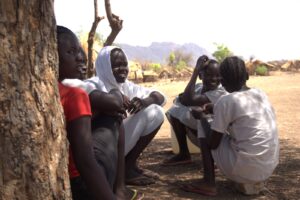
• Support school openings and reopening in displacement and conflict-affected areas • Facilitate enrollment and re-enrollment of displaced and out-of-school children • Reduce financial barriers through free or subsidized learning options • Track attendance and retention to prevent dropouts • Distribute textbooks, learning materials, and school kits
• Girls and boys affected by conflict, and poverty.
• Refugees and internally displaced children (IDPs)
• Children with disabilities
• Marginalized and hard-to-reach communities
Access to education is the foundation for protection, dignity, and opportunity. By ensuring access, EiC helps children regain stability and hope. The education crisis in contexts like Sudan demands a coordinated and urgent response. Reopening schools, restoring infrastructure, and expanding access to inclusive quality learning opportunities both through formal and non-formal pathways are critical to safeguarding the rights and futures of children and young people. In response, EiC focuses on facilitating learning continuity and school reopening through remedial learning programme, digital learning initiatives and capacity building for education stakeholders. Climate change further compounds these challenges. Recurrent droughts, floods, and food insecurity especially in the Horn of Africa and the Sahel have pushed families into negative coping mechanisms, forcing children out of school to support household survival. At the same time, poverty and underfunded public education systems limit governments’ ability to respond at scale. Without sustained, coordinated, and equity-focused investment in education in emergencies, Africa risks losing an entire generation of learners undermining social cohesion, stability, and long-term development. Ensuring safe, inclusive, and quality education for crisis-affected children and youth across Africa is therefore not only a humanitarian imperative, but a critical foundation for peace, resilience, and sustainable development.